

Iveco says it will produce and market its heavy-duty battery electric vehicles and fuel cell electric vehicles under its own brand following the full acquisition and sole ownership of its joint venture with Nikola based in Ulm, Germany.
Iveco’s acquisition of the German joint venture with Nikola was announced in May this year with the Italian truck maker saying it will now focus development on the European market while Nikola will focus its operations in North America.
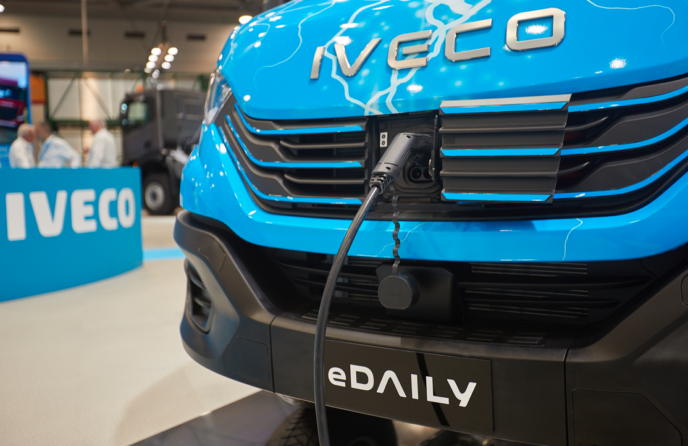
Meanwhile, in Australia and New Zealand, Iveco says its alternative fuels and propulsion plans are “progressing to schedule” with the fully electric eDaily preproduction unit previewed at this year’s Brisbane Truck Show.
eDaily
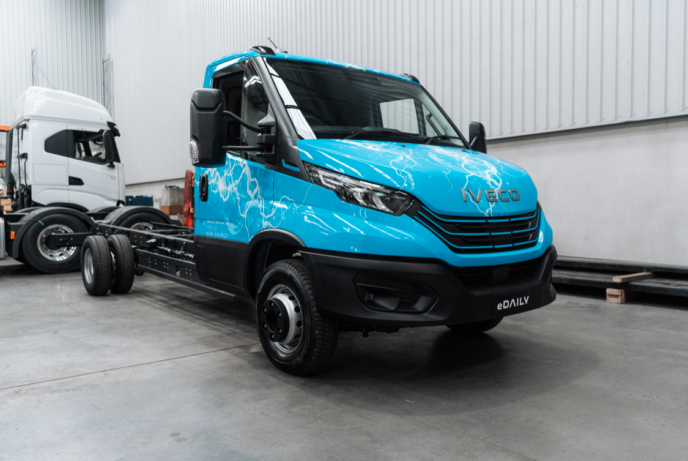
Testing of the eDaily is continuing based out of Iveco’s Customer and Innovation Centre (CIC) in Dandenong, Melbourne, and on local roads.
The first of five full production eDaily vehicles – a combination of van and cab chassis variants – will soon arrive in Australia and New Zealand, the company says.
The first of the all-electric vehicles will be placed within key customer fleets for evaluation and to gain real world operator feedback in local applications and conditions.
“The additional eDaily models will also provide further opportunities for key partners to further familiarise themselves with the vehicles,” Iveco says.
It says the partners include several tertiary institutions, Government departments and private enterprise, who will assist Iveco with training, tooling and recharging infrastructure in support of the model roll-out.
Heavy-duty BEV
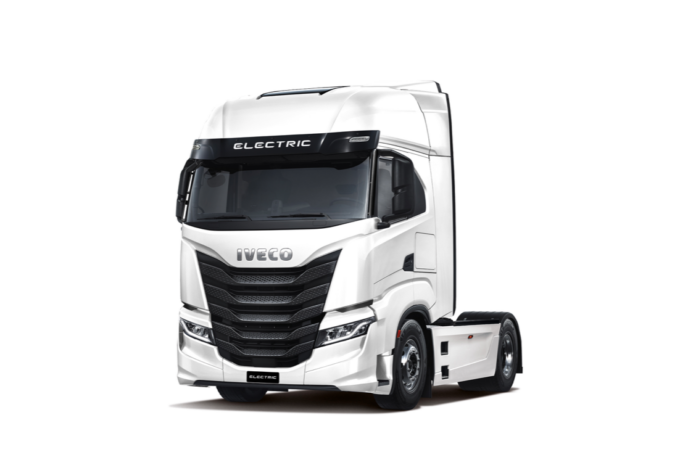
In the heavy-duty market, development of Iveco’s electric vehicle range continues at its Ulm manufacturing facility.
Its BEV and FCEV models feature an electric axle co-designed and produced by FPT Industrial, Iveco’s specialist powertrain sister brand; batteries are supplied by Proterra, and fuel cell technology and key components by Bosch.
The vehicles are based on the Iveco S-Way platform, which has been specifically redesigned to support both fuel cell and battery propulsion technology with a modular architecture.
The Iveco heavy-duty BEV has a range of up to 500 km and features a total battery capacity of 738kWh (9 packs) with charging power up to 350kW.
Iveco says this will enable hub-to-hub delivery applications, a wide range of regional work, and even applications requiring extended mileage with charging opportunity during mandated driver stops.
The Artic 4×2 configuration will be the first to enter the European market in the last quarter of 2023.
Heavy-duty FCEV
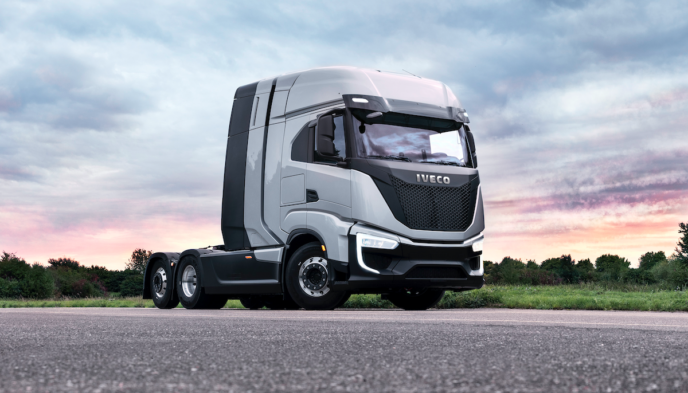
The Iveco heavy-duty FCEV boasts a range of up to 800 km with a refuelling time of under 20 minutes, offering a solution for long-haul commercial transport.
It can accommodate 70kg of H2 usable energy at 700-bar pressure.
The first FCEV units will be delivered in France, Switzerland and Germany at end of 2023, as planned in the H2Haul European project co-financed by the Clean Hydrogen Partnership.
Iveco says both its BEV and FCEV vehicles will be marketed and supported through its dealer network which includes 254 sales and service outlets around Europe.


