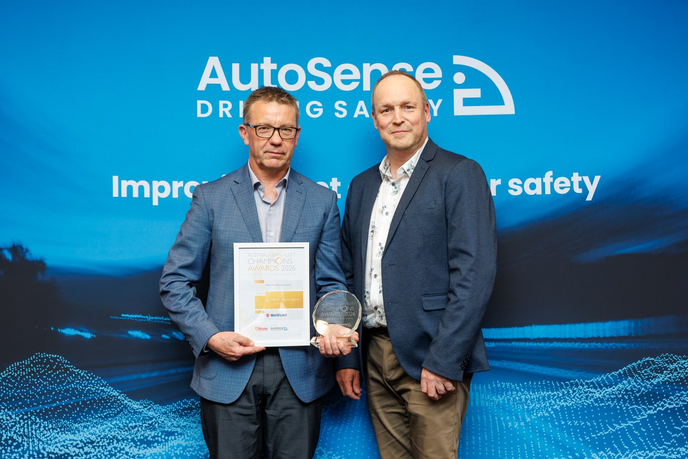
Central North Island logging operator Williams & Wilshier has cut driver microsleep events by 80% following the introduction of early-warning technology, fatigue education and personalised support.
The result coincides with general manager Jason Williams being named Road Risk Manager of the Year at the 2026 Australasian Fleet Champions Awards.
Organised by road safety charity Brake, the awards recognise efforts to reduce deaths and injuries involving vehicles driven for work. This year’s winners were announced in Auckland on November 10.
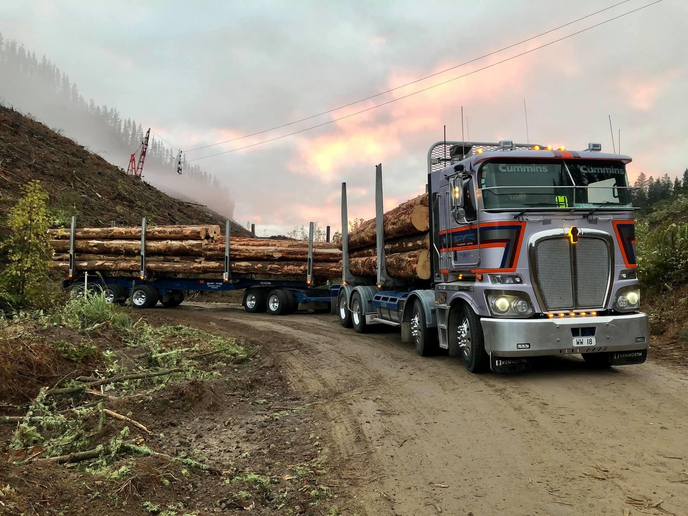
Williams & Wilshier operates 60 trucks transporting logs for several major forestry customers across the central North Island. About a third of its fleet operates off-highway, where drivers contend with forestry roads, changing harvesting locations and the demands of heavy-vehicle transport.
Across the operation, average monthly microsleep events have fallen from 21 to 4.2. Early detections of driver drowsiness have also declined by 54%.
The company’s fatigue-management programme was developed with fleet safety specialist AutoSense and uses Guardian driver-monitoring technology from Seeing Machines.
Williams & Wilshier began using Guardian in 2017 after Williams saw a television programme about an Australian truck driver affected by fatigue.
An initial three-month trial was funded through insurer NZI’s Fleet Fit programme, which supports businesses seeking to improve driver safety through training, technology and risk management. Guardian subsequently became a permanent part of the company’s safety programme.
Williams says the introduction of driver-facing cameras initially met resistance from some employees.
“It was a little bit challenging,” he says. “It was a definite adjustment for our drivers, and some of them didn’t like it and some of them took it on board.
“Like any change, it takes time.”
The company has since used monitoring data to identify fatigue patterns and support conversations with drivers about their health, sleep, lifestyle and working conditions.
About six drivers have accessed treatment for sleep apnoea, while employees are encouraged to speak up if they do not feel fit to drive.
Williams & Wilshier can change drivers, adjust start times or allocate shorter shifts when an employee is unable to complete a normal day’s driving safely.
“It’s just being able to try and ease whatever’s going on with them,” Williams says.
“And if they’re no good, there’s no point putting them on the road.”
Earlier warnings deliver results
In 2025, Williams & Wilshier became the trial fleet for Guardian’s Driver Drowsiness and Attention Warning capability, working alongside AutoSense.
Unlike systems that identify a fatigue event once a microsleep has occurred, the technology detects earlier signs of drowsiness. This gives drivers an opportunity to respond before their fatigue becomes more serious.
The trial was staged to measure its effectiveness. Drowsiness events were initially monitored without activating driver warnings, establishing a baseline for the fleet.
In-cab visual warnings were then introduced alongside fatigue-awareness training and targeted support for drivers identified as facing higher risks.
During the six months after those measures were introduced, average monthly microsleep events fell 80% compared with the previous six months. The improvement continued across the following four-month measurement period.
Initial monitoring also found that three drivers accounted for 56% of all detected drowsiness events.
Williams & Wilshier used that information to begin individual discussions about sleep habits, lifestyle and the demands of particular routes.
By April 2026, the three drivers had achieved an average 66% reduction in detected drowsiness events. Individual improvements ranged from 48% to 80%.
The remaining vehicles in the fleet collectively recorded a 39% reduction.
AutoSense fatigue and sleep specialist Kat Aubrey also provided education to help drivers understand how sleep and lifestyle choices can affect their fitness to drive.
Williams says bringing in an external specialist helped reinforce the company’s safety messages.
“I think having someone like Kat come and speak to our guys has been really good too,” he says.
“It’s someone different; they’re not hearing the same story from people like myself.”
The education encouraged some employees to seek medical assessments for possible sleep disorders.
“It’s been an education for a lot of people,” Williams says.
“Out of that came a significant amount of people going and having sleep apnoea tests.”
Aubrey says Williams & Wilshier’s willingness to invest time in its drivers was central to the programme’s success.
“I think the key with Jason and his team was that they really put the time and effort into the people and the education,” she says.
“They show that they care, and it’s really made a big difference.”
Focus turns to lasting change
Williams & Wilshier is now in its second year operating under NZTA’s Alternative Fatigue Management System.
The system allows approved operators to use shorter, more frequent rest breaks when supported by evidence of effective fatigue-management practices.
Williams says the approach has benefited the company and believes it could have wider application.
“I would like to see that rolled out to the heavy transport sector in New Zealand,” he says.
He also credits AutoSense with helping change attitudes towards fatigue within the business.
“Honestly, they’ve been great to work with. It’s been fantastic,” Williams says, describing AutoSense as “a very big part of changing our culture”.
His advice to other operators considering driver-monitoring technology is straightforward.
“You’ve got to give it a go. Don’t be afraid to try it.”