

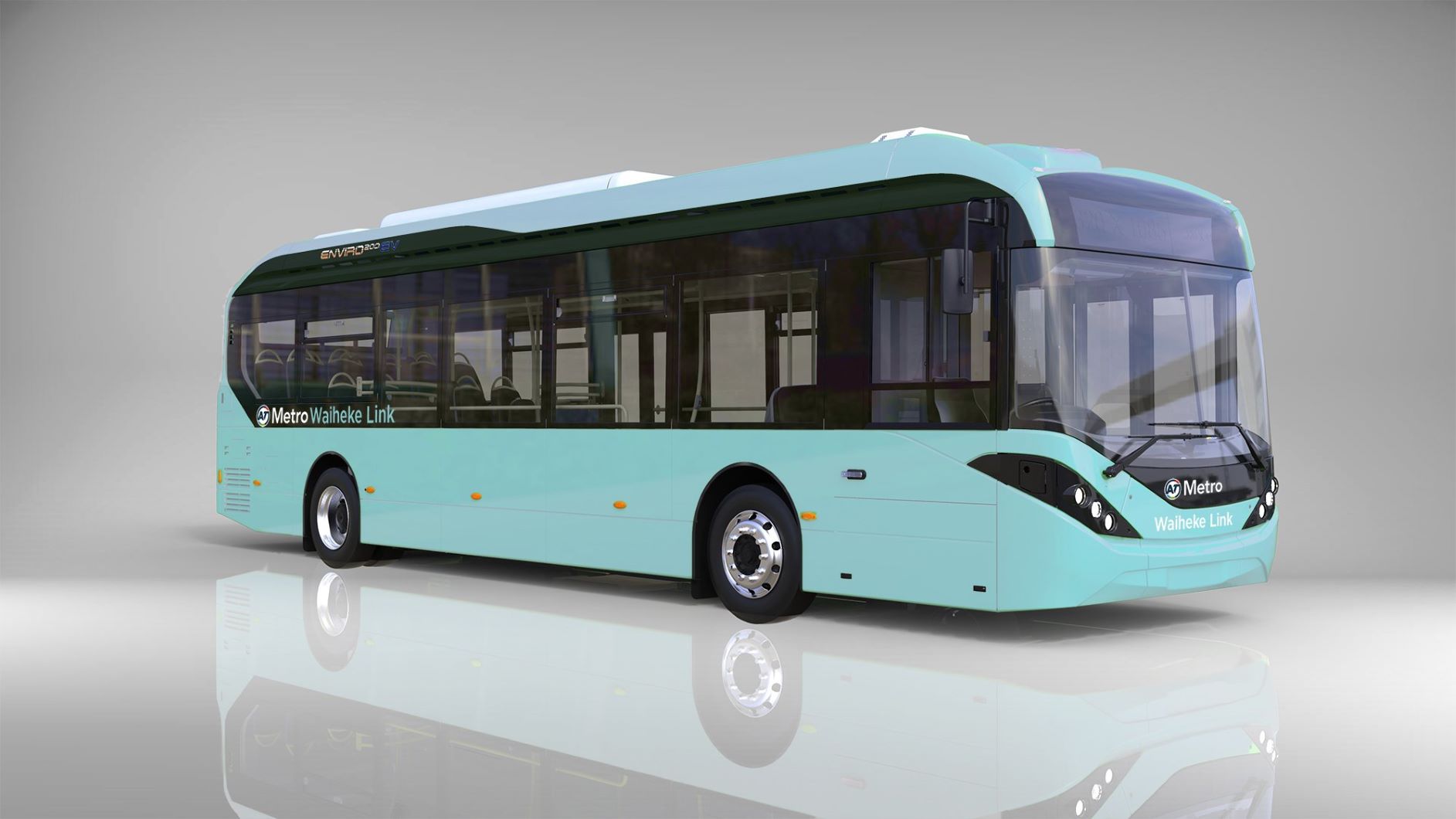
Waiheke is living up to its reputation as the Electric Island with two more firsts to add to its 200 plus Nissan Leafs and 250 total EVs – 5% of the island’s passenger cars.
Coming next month are three electric buses – the first on scheduled services in the greater Auckland area – followed by another three in November, while an electric rubbish truck has just arrived.
The expected start date for the first batch of e-buses on Waiheke is the first week in November, with the second batch at the beginning of December.
The remainder of the Waiheke Bus urban fleet will be upgraded to electric as they get to the end of their lives (no bus older than 20 years, and average fleet age no more than 10 years).
Waiheke’s Link will be Auckland Transport’s first contracted electric fleet (CityLink and Airport Link will follow shortly).
All previous electric buses AT has run have been part of trials – so AT is very excited to see these fully operational for the first time.
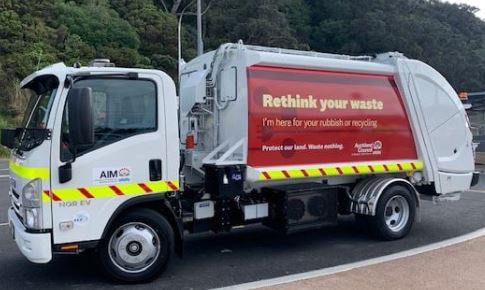
And this week saw the arrival on the island of the Auckland Council’s first electric rubbish collection truck – the first of three to go into service on Waiheke.
The truck is an Isuzu NRQ, converted to electric use by SEA Electric in its South Auckland workshops.
Josh Vendrig, SEA Electric’s lead engineer, says the non-polluting truck is ideal for the stop/start nature of kerbside collections, and will help preserve Waiheke’s unique environment.
The e-rubbish truck began collecting rubbish and recycling on September 14.
Two more electric trucks should be delivered within the next year after delays due to COVID-19.
Auckland mayor Phil Goff says the new vehicle will help Auckland work towards its climate change goals.
“Vehicle emissions make up more than 40% of Auckland’s total carbon emissions, so every vehicle we replace with electric will help us reduce emissions and increase the sustainability of our region.”
Goff says the EVs are also cheaper to run, easier to maintain and less noisy than conventional trucks.
Waiheke Local Board chair Cath Handley says Waiheke Island, with its low distances, is a good match for EV technology.
“This is another major step forward in our commitment to Electric Island Waiheke’s goal to be all-electric by 2030.”
Power comes from a direct-drive permanent magnet motor producing 130kW at peak power with a continuous rating of 100kW. The battery parameters are 132kW/h Li-NMC. The truck can be plugged into a standard three-phase socket at the AIMS facility and is expected to take around six hours to fully charge.
Auckland Council is exploring the wider use of EVs for kerbside collections across the region, including for the kerbside food scraps service when it rolls out a couple years from now.
Papakura is also expected to have an electric truck delivered by the end of this year.


