

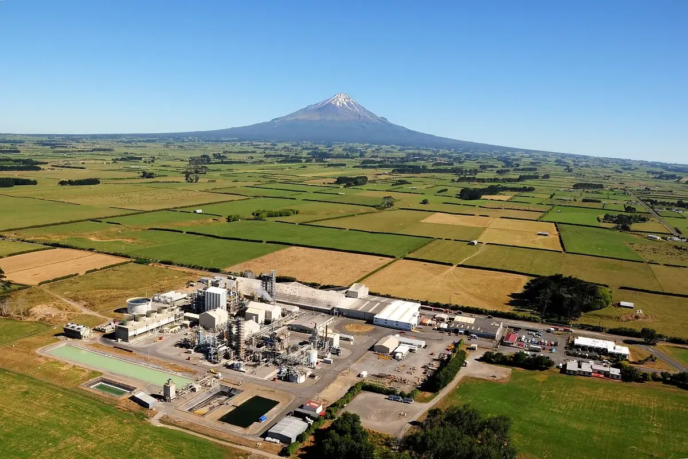
The Court of Appeal has dismissed action opposing the consent of Hiringa Energy and Ballance Agri-Nutrients’ Kapuni green hydrogen project in Taranaki.
In April 2022, Greenpeace and South Taranaki hapū filed an appealed against the High Court’s approval of the work which covered the installation of four wind turbines and 5MW of electrolysis for green hydrogen production and a hydrogen refuelling station.
The project aims to remove the equivalent emissions of up to 30,000 cars cars per annum and help decarbonise heavy transport.
Greenpeace claimed the High Court erred in failing to find that the consenting panel’s decision breached the Covid-19 Recovery Fast-Track Consenting Act by placing no conditions on when and how the project will transition from fertiliser feedstock production to hydrogen fuel production.
The project received nearly $20 million in funding from the Government’s Provincial Growth Fund in 2020 and has also received significant investment from industries interested in New Zealand renewable energy including Japanese trading and investment multinational Mitsui & Co.
Hiringa Energy chair Cathy Clennett says the recent Court of Appeal decision to throw out the appeal was a “tremendous relief”.
“Hiringa is dedicated to building green hydrogen production and infrastructure to displace fossil fuels in transport and industrial feedstock.
“We are a growing Taranaki-based start-up, and considerable emissions-reduction initiatives such as this put the wider spotlight on the innovation achievable in our region,” Clennett says.
“This wind generation capacity of up to 24 MW will supply renewable electricity directly to the project which will power an electrolyser to produce industrial scale green hydrogen to be used both as feedstock into the Ballance plant to reduce the plant’s environmental footprint, and as a zero-emission transport fuel.
“Further investment into the New Zealand hydrogen market is evidenced by the significant private and public sector investment in Hiringa Energy’s high-capacity refuelling network together with TR Group’s corresponding commitment to the introduction of a fleet of heavy hydrogen trucks.
“Looking ahead the growth potential is material with industry leaders like Ballance desiring decarbonisation of their assets,” Clennett says.
Balance chief executive Kelvin Wickham welcomed the decision and says work to commence green hydrogen as a new fuel source for Taranaki and New Zealand is a significant milestone.
“In partnership with Hiringa, the Kapuni project can now move forward with our goal of beginning to produce green hydrogen as soon as possible.
“With the number of green hydrogen fleets set to climb over the next few years to help meet emission reduction targets, the clean fuel has already proven to be a key resource for the future.
“The Kapuni project will provide a lower carbon footprint for New Zealand farmers and growers, as well as supplying green hydrogen for Hiringa Energy’s heavy vehicle hydrogen refuelling network,” Wickham says.
Despite this ruling, Greenpeace is calling on Hiringa Energy to commit to a timeframe for transitioning from fertiliser production to transport fuel.
“This is a loss for the climate and for fresh water in Aotearoa, as well as for local hapū of Ngāruahine, who also have issues with the project, but we call on Hiringa Energy to do the right thing and commit to a transition out of fertiliser production within five years as well as honouring the wishes of local hapū with regards to the location of the wind turbines,” Greenpeace Aotearoa programme director Niamh O’Flynn says.


