

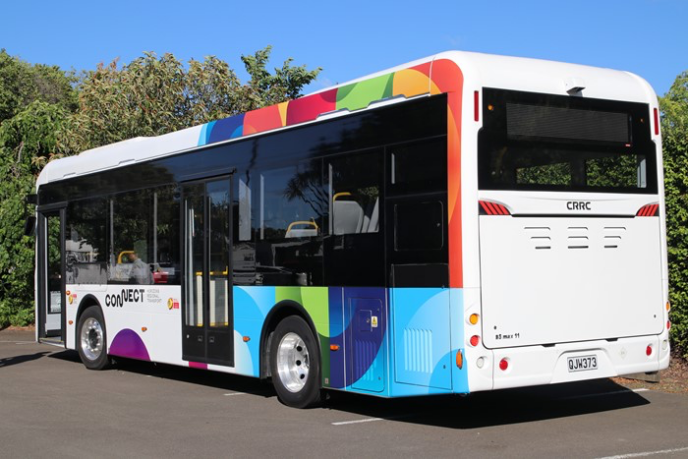
Shipping disruption has delayed the arrival of a new electric bus fleet in Palmerston North which is set to be the country’s first fully electric bus fleet.
Palmerston North and Ashhurst residents were to get the fully electric fleet at the same time as their new bus network was set to launch on February 19.
However, operator Tranzit Group says the rollout of the network and the 43 electric buses will now be delayed until March 4.
Tranzit general manager of bus and coach Jenna Snelgrove says while two of the company’s brand-new electric buses have been operating on the existing network from January 19, the remaining tranche of new electric buses are currently enroute to New Zealand from China.
A shipping delay has meant that the tranche of buses will be arriving behind schedule.
“It is disappointing that our Palmerston North community has to wait a little longer for their 100% electric bus fleet to be in service, but I’d like to assure them that when all 43 electric buses are on the road it’s going to be a positive game changer.
“Tranzit was informed by our international shipping partner that the delay was a by-product of global shipping issues caused by shipping delays at the Panama Canal which have subsequently added to congestion to the Suez Canal and congestion in other ports.
“Our New Zealand family-owned bus and coach company had been prepared to receive the final tranche of electric buses in early January, but the shipping delay has pushed this time frame out by several weeks,” Snelgrove says.
The team is preparing for the arrival of the new electric buses so they are network ready. This includes installation of the Bee Card ticketing system, onboard telematics and certification paperwork. The preparation comes after Tranzit already installed chargers at its Palmerston North depot and employed a full quota of drivers to deliver the new network.
“Locals in Palmy may have already seen our drivers out and about completing route familiarisation training on the new network and this training will continue until the new start date,” Snelgrove says.
Horizons Regional Council transport services manager Mark Read says it’s unfortunate the shipping issue means the introduction of the new network will be delayed.
“Other options were considered: running the new network without 15-minute frequency at peak times, or sourcing diesel buses from around the country to cover the shortfall in vehicles.
“Both those options are not ideal. Running 30-minute frequency all day could reduce frequency at peaks for some users, while buses from elsewhere would not have correct ticketing technology and be branded with other regions’ public transport networks. Both options would likely cause confusion, difficulty and frustration for passengers.
“We believe delaying until we can launch the network on the full timetable with a fully electric fleet will avoid confusion and ensure the new network runs as it should from the beginning,” Read says.


