


Transport-related company liquidations rose 27% year-on-year in 2025, contributing to the highest overall level of business failures since 2010, new credit data shows
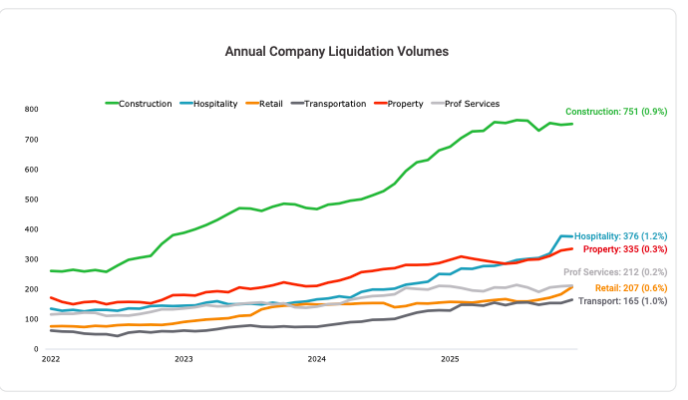
The January 2026 Credit Indicator Report from credit bureau Centrix shows transport saw 165 company liquidations for the year.
It was among the sectors recording the sharpest increase in failures, alongside hospitality (+50%), trail trade (+34%) and construction (+13%). Construction remains the leading contributor to company liquidations, with 751 firms liquidated in 2025. Across all industries, there were nearly 3000 company liquidations in 2025 (+17%).
The report shows business credit demand lifted slightly overall, up 0.7% year-on-year, but demand within the transport sector declined 5% over the period, indicating subdued investment and expansion appetite among transport operators.
The data shows vehicle loan arrears also climbed 6% year-on-year, reaching 5.8%, signalling mounting repayment stress for some households with car finance.
Overall consumer credit demand remained strong at the start of the year, but pressures are emerging within vehicle-related lending. While demand for auto loans rose modestly by 2.7% compared with a year earlier, arrears growth outpaced demand, suggesting affordability challenges for some borrowers.
Household lending conditions remain mixed. Approved new household lending strengthened over the December quarter, supported by increased vehicle lending and personal loans, but rising arrears suggest some borrowers are struggling to keep up with repayments as cost pressures persist.
Mortgage arrears remained stable and below last year’s levels, while credit card arrears edged higher. In contrast, vehicle loan arrears were one of the fastest-growing categories, reinforcing concerns about financial strain linked to transport costs and vehicle ownership.
The report also highlights a widening divide between sectors, with agriculture showing improved resilience and a decline in liquidations, while transport, construction and hospitality continue to face elevated risk.


